
Cardiovascular Disease and Diagnostic Challenges
As the leading cause of death, cardiovascular disease (CVD) poses a major burden on health care systems worldwide, accounting for approximately one-third of deaths in 2017 alone.
Research shows that up to 80% of CVD mortality occur in low-middle income countries (LMIC)s, where the availability and cost of medical imaging remain fragmented. Despite this, existing diagnostic tools are impractical, due to the technical expertise needed to operate them, their enormous size in relation to other medical equipment and related maintenance cost.
However, diagnosing CVD is well-established in high-income countries (HIC)s, where cardiovascular magnetic resonance (CMR) is the ‘gold standard,’ non-invasive imaging tool to help analyse cardiac function, structure, and other heart abnormalities, including cardiomyopathy.
Unfortunately, its complex technical requirements is one of the main cost drivers that makes CMR-imaging unattainable to LMICs. But research innovations are underway to develop low-field (LF) diagnostics to cater for low-resource settings, where it is not practical to adopt a high-tech machine that needs on-site technicians and expensive maintenance – with sophisticated add-ons that are seldom utilised.
A study, published in NMR in Biomedicine recently, highlights functional changes that make LF-diagnostics better options for LMICs. Due to high demand, but exorbitant costs involved in the way that standard CMR-tools operate, there was a need to re-design the equipment to cater for LMICs.
Aiming to close the gap between well-off and low-resource countries, a global team of scientists in the fields of biomedicine, cardiology, neurology, oncology, and radiology have been vigorously testing modified CMR-models with basic functions.
Dr Sola Adeleke, oncologist and clinician-scientist based at the School of Biomedical Engineering and Imaging Sciences at King’s College London (United Kingdom), goes on to explain that the super-conducting MRI that is being used and sold by vendors, needs helium to cool down the magnet, with not many countries in Africa able to acquire this gas. “South Africa has access to both liquified nitrogen as well as helium, but of the fifty-six counties in Africa, only about twenty-five have in-house resources to safely deliver those gases.
“Without them, you cannot cool down the magnets of the machine and unless they have cooled down, the machine will not work. “Therefore, there is widespread interest in building helium-free machines to negate the need to buy the gases – helium poses a threat to human life unless managed with caution.
Dr Adeleke has been actively involved in a series of studies to remodel diagnostic imaging for low-resource settings, particularly Africa and south-east Asia. He echoes the sentiment that the cost of HC resources adds to rising HC spending, saying that the new CMR-technology would “make the imaging technology more accessible to countries that need them most.”
“The sustainability of current imaging tools is not feasible, because a typical MRI-machine comes with a US$2 million (under R33-million) price tag. But if one is talking about making it accessible to Malawi, The Democratic Republic of Congo or Sudan, that amount is probably challenging to pay per machine.”
“Therefore, we are hoping to develop simpler CMR-devices that are more functional, with no bells and whistles. The imaging machines we require for LMICs must still make an impact on heart imaging diagnostics used in cardiac diseases.”
But the size of the machines and the additional add-ons are unreasonable for under-resource settings, especially if it requires extra construction to install the machine. “There is quite a lot of engineering and physics that goes into it. They need multiple components to put these MRI-scanners together, the magnets are huge, the gradients, coils, everything is state-of-the-art. Even the quench pipes that remove the helium from the machine, are sophisticated technologies,” Dr Adeleke added.
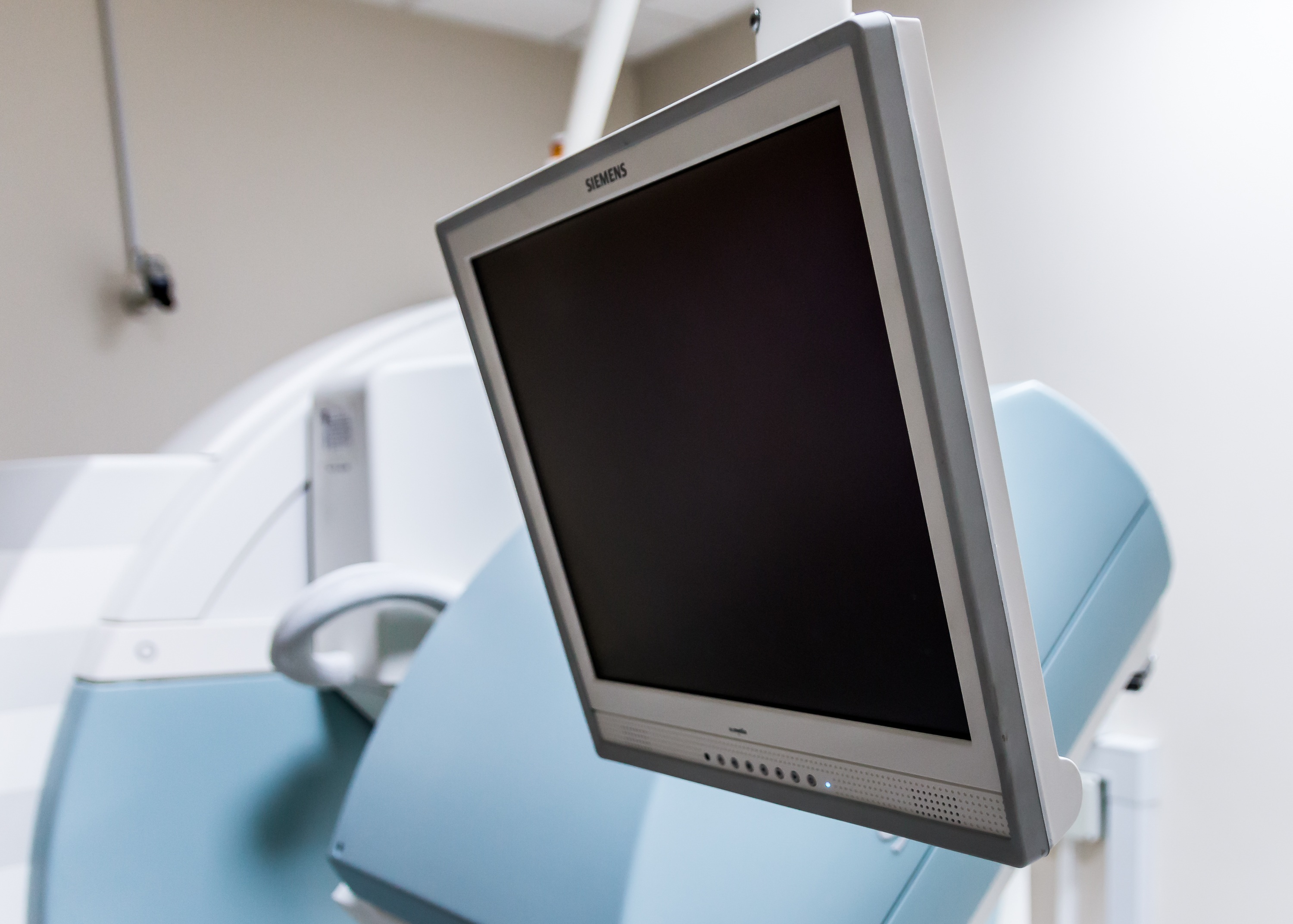
The Siemens promax CMR machine which has regulatory approval and is available on the market, promises optimal diagnostic quality images while using LF magnets. Considerable progress is underway to simplify medical imaging requirements and develop affordable diagnostics to address CVD and make treatment available to all, especially LMICs. While the magnet could save on energy costs, the LF-CMR scanner is still able to generate enhanced images to speed up the identification of conditions, including congenital and valvular heart disease, and right ventricular function.
These features have a direct impact on reducing the cost of medical imaging equipment. Compared with MRI, CMR is cheaper for use in LMICs and aims to make diagnostics more efficient by reducing constant maintenance and running costs.
The research further highlights that CMR is a more cost-effective (not using additional energy) tool for CVD diagnosis due to its durability and boosted imaging quality. Compared with standard tools, the total amount used to pay for a single MRI-machine can acquire up to four, LF CMR diagnostic tools, granting more equitable access to care.
Reforming Health Diagnostics to Transform PHC
WHO data shows that scaling up primary health care (PHC) programmes in LMICs could save an estimated 60-million lives and may increase life expectancy by 3.7 years by the year 2030. However, PHC is also multifaceted, and tackles the broader determinants of health to “ensure people receive quality, comprehensive care.”
Despite the global adoption of all-inclusive health resolutions, the realities facing low resource communities, paint a different picture, as Dr Adeleke explains: “There is room for improvement in the state of PHC and there are multiple disease burdens, mainly because of the diverse cardiac conditions in Africa and other LMICs, For instance, Chagas disease in Brazil, for example, is a parasitic disease that causes cardiomyopathy while HIV also impacts the heart in several ways.”
He cautions that heart-related conditions like the gradual enlargement of the heart muscle, is manageable if diagnosis happens early, emphasising “the need to identify health threats promptly, to avoid long-term damage and economic loss.”
Impact of High Disease Burden on Adolescent Population in SSA
The prevalence of hypertension among adolescents in sub-Saharan Africa (SSA) is particularly high, not forgetting that most people living with HIV/AIDS in SSA, are young people. As already stated, HIV can also impact the functioning of the heart muscle.
A systematic review and meta-analysis by Chen et al. published in Lancet in 2023, highlighted the rising adolescent disease burden in SSA. The sample of under 38,000 participants aged 10-19 years represented ten of the eligible forty-nine countries. And despite not being able to collect data from other LMICs, the study further suggests that approximately one out of ten adolescents could be living with hypertension in SSA alone.
Dr Adeleke said heart disease is becoming increasingly common among younger generations. “In Africa, the disease burden affects more young people. If a 30-year-old develops heart disease, early diagnosis and timely treatment can improve their outcomes.”
“If the person is a bread winner – thanks to the early intervention – he can continue to provide for his family for as long as possible and remain active within the economy as well.” Without immediate, diagnostics, NCDs are untreated, which can affect entire generations, communities, and lead to economic loss.
“Undiagnosed conditions or those that are diagnosed late are the drivers pushing us to develop sustainable ways to enact imaging so that we can prevent chronic conditions like diabetes, hypertension and obesity. When NCDs lead to chronic cardiovascular problems, it becomes necessary to examine the organs more closely – using standard diagnostic tools – to find other health threats,” Dr Adeleke added.
Various prototypes are still undergoing testing, with lucrative models developed in Hong Kong and The Netherlands, while a separate collaboration is furthering diagnostics research efforts as part of a joint South Africa-Montreal project. “All these machines are still in early stages and have not been through validation processes yet.”
Additional features of CMR include more accurate diagnosis for ischaemic heart disease and improved risk stratification. The enhanced quality of CMR-images, when compared with MRI-scans, are attributable to gradient coil and radiofrequency enhancements. An optional, artificial intelligence-driven image manipulation function is available to improve the accuracy of diagnostic images.
With more than one LF-machine being in development, the cost of acquiring the technology for LMICs, would be less. Bringing significant improvements to the medical imaging field, LF CMR promises “improved efficiency, because there will only be provisions made for what individual facilities need at PHC-level, nothing too sophisticated. If we look at hospitals in Africa, we envisage that these machines would be about US$50,000, compared with the millions of dollars that they cost now,” Dr Adeleke added.
Gaps in Primary Health Care Funding and Diagnostics
Universal health coverage (UHC) remains a global commitment to ensure access to care for everyone, everywhere without economic hardship by 2030. The World Bank/World Health Organisation (WHO) Global Monitoring Report 2025 indicates that while nations have made progress, “persistent gaps and inequalities are on the rise.”
While most countries have been able to expand their health care offering and managed to reduce financial hardship associated with medical care, low-resource communities continue to endure the highest out-of-pocket spending on health care (HC).
Globally, more than 1,6 billion people are unable to prioritise their well-being due to additional costs linked to obtaining health services, because over-spending may worsen their already disadvantaged living conditions.
South Africa’s referral policy defines core health services as those that include, amongst others, PHC clinics and various levels of hospitals, diagnostic and para-clinical, therapeutic, and emergency medical services.
It further defines how a well-run health system should function towards the “provision of UHC and the attainment of improvement of health outcomes.” However, limited or no access to certain services, like diagnostic imaging and screening tools, prolong diagnosis, which further delays treatment and potential health advances.
Author: Lenadine Koza