Strategic Health Innovation Partnerships
About SHIP
 The Strategic Health Innovation Partnerships programme (SHIP) is South Africa’s flagship health innovation platform, established as a partnership between the SAMRC and the Department of Science, Technology and Innovation (DSTI). Through strategic funding, partnerships, and active portfolio management, SHIP accelerates the development of affordable and locally relevant health solutions, including diagnostics, vaccines, therapeutics, medical devices and digital innovations. By connecting researchers, industry, government and funders, SHIP aims to translate national priorities into impact, strengthen innovation capacity, and improve health outcomes in South Africa and other low- and middle-income countries.
SHIP supports health research, development and innovation aimed at advancing locally relevant health solutions and strengthening South Africa’s health innovation ecosystem.
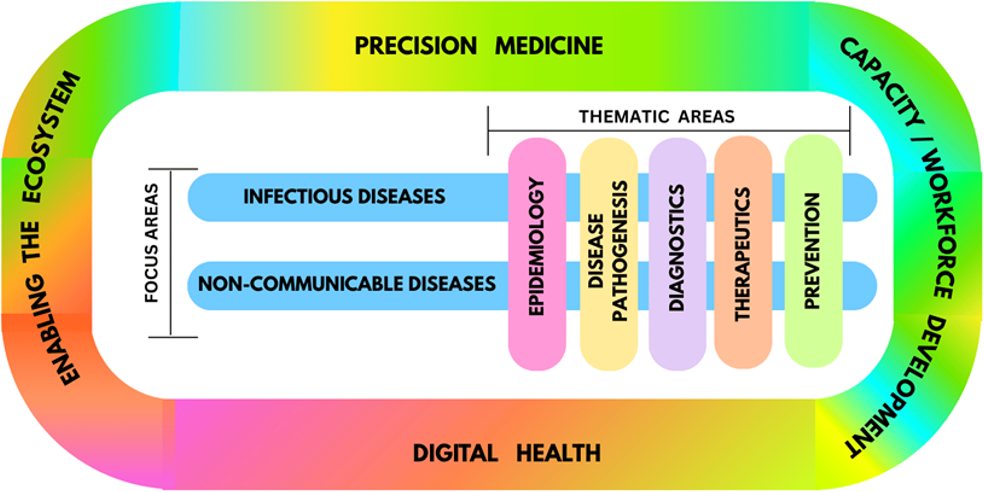
- Antimicrobial Resistance (AMR)
Thematic areas: Epidemiology; Diagnostics; Treatment and Therapeutics. - Human Immunodeficiency Virus (HIV)
Thematic areas: Disease Pathogenesis; Prevention; Diagnostics; Treatment and Therapeutics. - Tuberculosis (TB)
Focus areas: Epidemiology; Pathogenesis; Vaccines; Prevention; Diagnostics; Treatment and Therapeutics, including drug discovery and capacity-development initiatives linked to the TB product-development pipeline. - Malaria
Thematic areas: Prevention; Treatment and Therapeutics. - Women’s, Maternal, Neonatal and Child Health (WMNCH)
Thematic areas: Prevention; Diagnostics; Treatment and Therapeutics relevant to infectious diseases. - Pandemic Preparedness and Emerging Infectious Diseases
Includes COVID-19 and mpox within the broader pandemic preparedness and emerging infectious diseases portfolio.
Thematic areas across this programme group: Disease Pathogenesis; Prevention; Diagnostics; Treatment and Therapeutics.
- Cancer
- Cardiovascular Diseases (CVDs)
- Diabetes
- Chronic Kidney Disease
- Hypertension
- Women’s, Maternal, Neonatal and Child Health (WMNCH)
- Mental Health
Prevention, diagnostics, treatment and therapeutics are relevant to women’s, maternal, neonatal and child health across both overarching disease groups.
Precision medicine and digital health support innovation across disease areas through genomics, data platforms, artificial intelligence and digital tools.
- South African 110000 Human Genome Programme
The South African Medical Research Council (SAMRC), in partnership with the Department of Science, Technology and Innovation (DSTI), is implementing the pilot phase of the South African 110,000 Human Genome Programme (SA110K-HGP). The pilot aims to sequence 10,000 human genomes from ten well-characterised clinical cohorts, linking genomic and clinical data to strengthen South Africa’s capacity for precision medicine.
Read the SA110K-HGP Pilot Phase brochure
SHIP expands participation in health innovation through training, mentorship, institutional partnerships and access to specialised research capabilities, with a focus on historically disadvantaged researchers and institutions, women researchers and emerging scientists.
- CATIR Programme
The CATIR Programme brings together the SAMRC, Thermo Fisher Scientific and DSTI to establish five Centres for Advanced Training and Innovative Research across Africa. Implemented by BRIP with GIPD support, it aims to train more than 5,000 scientists over five years through university-certified scientific, laboratory, leadership and professional development training, strengthening capacity at under-resourced universities. - TB drug discovery capacity development
Developed within SHIP’s transformation strategy, this initiative uses partnerships between historically disadvantaged researchers and institutions and established research teams to strengthen skills, institutional capabilities and participation in the TB drug discovery pipeline. - Grand Challenges African Drug Discovery Accelerator
GC ADDA connects African researchers and shared platforms to advance drug discovery for unmet medical needs through collaboration, training and mentorship.
These initiatives connect funders, researchers, industry and government to improve coordination and create opportunities for joint investment in health innovation.
- Africa Health Research and Innovation Funders Forum (AHRIFF)
Multiplying the impact of health funding across Africa
AHRIFF brings together funders, researchers, and innovators to align resources, close funding gaps, and build sustainable health ecosystems across the continent. Visit the AHRIFF website: https://ahriff.org/ - EDCTP
- EU Africa PerMed
An integrated approach to health innovation
SHIP adopts an integrated approach to addressing South Africa’s and the African continent’s dual burden of disease by investing in both disease-specific innovation and cross-cutting platforms that strengthen South Africa's health innovation ecosystem. Through strategic initiatives in precision medicine, digital health, capacity development and national and global partnerships, SHIP builds the capabilities, infrastructure and collaborations needed to accelerate the development, translation, adoption, and sustainable impact of innovative health solutions.