
Assoc Prof Freddy Sitas
Chief Specialist Scientist
Burden of Disease Research Unit (BODRU)
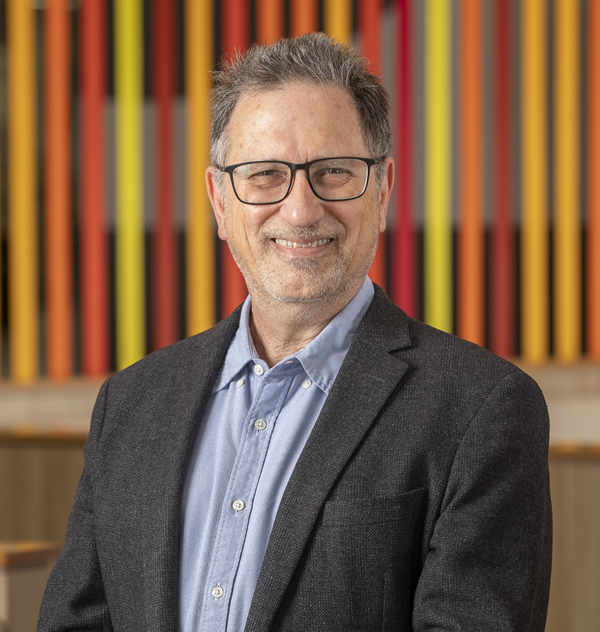 Assoc Prof Freddy Sitas was a recipient of an SAMRC Overseas Research Scholarship in 1986 which enabled him to complete a Masters in Epidemiology at the London School of Hygiene and Tropical Medicine. This was followed by a D.Phil. at University of Oxford after which he returned to South Africa to lead the National Cancer Registry until 2002. He is now at University of New South Wales-Australia and works part-time as a Chief Specialist Scientist in BODRU. His career focuses on the study of infection, smoking and their relationship to cancer and premature morbidity and mortality. These two exposures account for half the cancers worldwide and there are proven pathways to prevent these. For this he received the CANSA AG Oettle Memorial Medal in 2013 in recognition of contributions to cancer control and prevention. He has a strong interest in the role smoking and now e-cigarettes play out in current and future disease outcomes. He has authored over 180 peer-reviewed publications and is Editor-in-Chief of Cancer Epidemiology (IF=3). He was on WHO-International Agency for Research on Cancer Working Groups on carcinogenicity of Tobacco, HIV, and Biological Agents, and on Clinical Oncology Society of Australia working groups on smoking cessation after cancer, and on carcinogenicity of e-cigarettes.
He led the establishment (in collaboration with Professor Valerie Beral, U. Oxford) of the (MRC/CANSA/NHLS-funded) Johannesburg Cancer Study, now the largest cancer epidemiology biobank in Africa, which has been pivotal for local research capacity development in cancer epidemiology and genomics (c.f. the MRC-led Evolving Risk Factors for Cancers in African Populations (ERICA-SA) project. With Professor Debbie Bradshaw, Dr. Danuta Kielkowski, and Professor Richard Peto (U. Oxford), he introduced a question on smoking on the South African death notification form, in keeping with Articles 14 and 20 of the WHO-Framework Convention on Tobacco Control. This is now providing extensive data on the evolution hazards of smoking in South Africa. He is currently supervising Tracy Glass (Biostatistician, BODRU) on the analysis of about 4m deaths from smoking 2000-2023 and advising BODRU on its cancer research strategy.
| What inspired your career in epidemiology? |
| My first exposure to ‘health’ in South Africa was watching a child die of typhoid in ICU in Agincourt, Mpumalanga. That gave me an important insight on the social determinants of death and drove much of my thinking and commitment to population health. It was a couple of years later that I discovered epidemiology, which is a useful way to divide big problems into smaller pieces, clearly define them, count and prioritise each. I had several mentors who shaped my thinking, starting with Professor Margaretha Isaacson (at National Health Laboratory Service), encouraging me to study the cholera epidemic at Umvoti Mission Reserve in 1982. One book that influenced my thinking was by Richard Feachem on adult mortality in the developing world who showed that healthy adults make healthy children. Post-PhD, it was Professor Valerie Beral who encouraged me to investigate the role HIV plays on cancer in South Africa and Professor Richard Peto who encouraged me to continue work on smoking. |
| Why is it important to study smoking in African populations? |
|
We know a lot about the effect of smoking in high income countries but smoking in Africa is an understudied field. Through our death notification work, we showed that tuberculosis and infectious respiratory disease to be the leading causes of death from smoking in African populations, something we did not know before. By far from studying the bleeding obvious, smoking brings new surprises every year, especially now with the evolution of e-cigarettes. |